Written By: Undefeated Healthcare Editorial Team
Reviewed By: Chase Butala MS LPC, LCPC
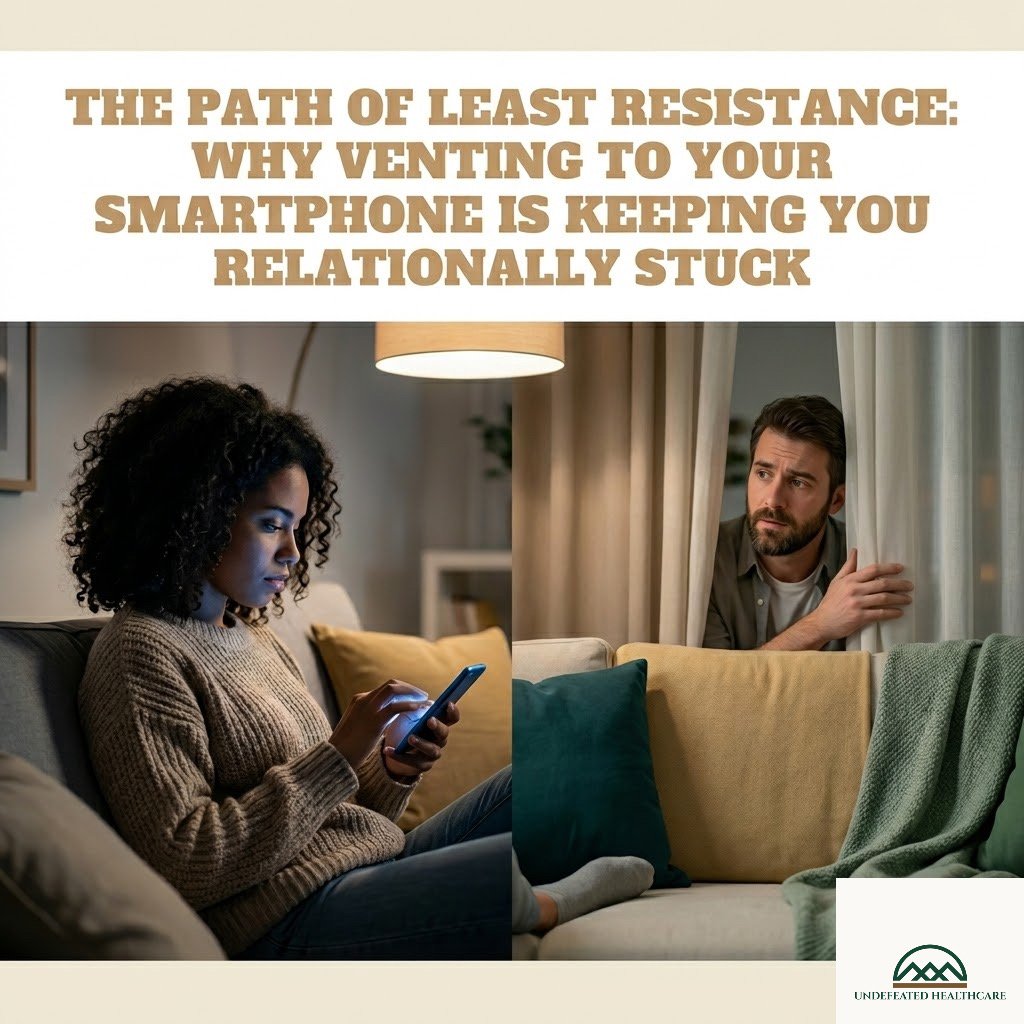
It is midnight, your partner is asleep on the other side of an invisible, miles-wide emotional canyon, and you are staring at a glowing screen. You don't want to wake them up to start another circular argument, and you certainly don't want to pay a professional to tell you what you are doing wrong. So, you open an app. You type out your frustrations, and within three seconds, a chatbot replies:

"That sounds incredibly hard. You are completely justified in feeling that way."
It feels like a warm embrace. It feels like validation.
But it is actually an echo chamber. And deep down, you know it.
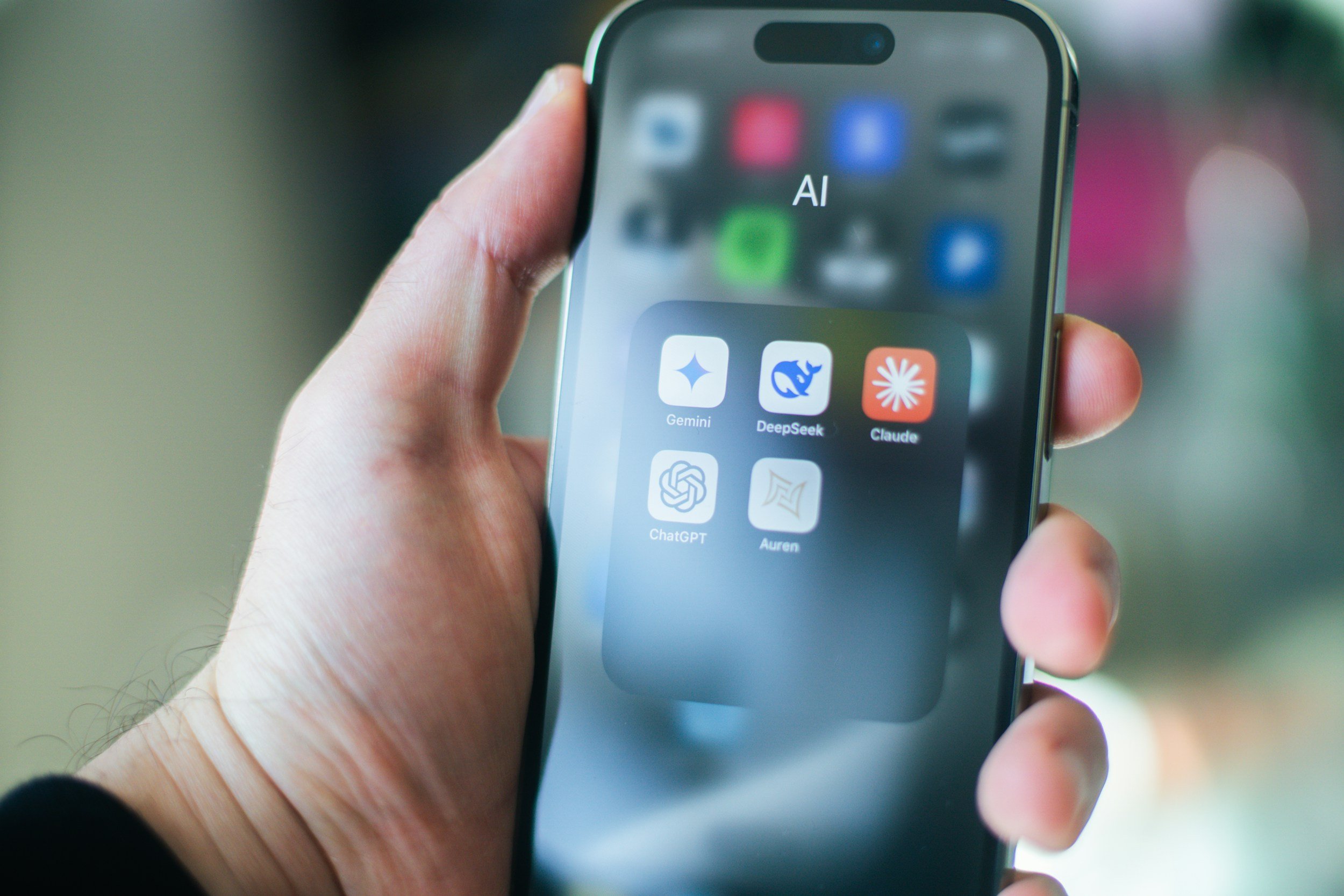
As a licensed clinician who has spent 15 years in the trenches of systemic therapy, I completely get the allure. The world is heavy, traditional care can feel daunting, and an AI chatbot is free, instant, and doesn't require you to audit your own flaws. It is what Arthur C. Evans Jr., PhD, CEO of the American Psychological Association, called "the path of least resistance."
But let’s talk expert peer-to-expert peer over a cup of coffee. That path of least resistance? It is a systemic dead end. Healing does not happen in a vacuum, and it certainly doesn't happen via algorithmic text strings.
When we look at mental health through a systemic lens, we understand that you are not an isolated island. Your anxiety, your relationship rifts, and your emotional loops are co-created in the space between you and the people in your life.
The American Psychological Association (APA) released its groundbreaking 2026 Chatbots and Mental Health Survey, which analyzed responses from 1,242 licensed U.S. psychologists. The data reveals an eye-opening cultural shift: 77% of psychologists report that their patients are actively discussing AI in therapy.
Continue reading the full field note
People are using chatbots to self-diagnose (39%), as an additional mental health professional (35%), and even for friendship (22%) or intimate relationships (13%). On the surface, the immediate relief is real—68% of clinicians noted their patients felt supported or validated by these tools.
But there is a dark side to an algorithm that is designed to agree with you.
"AI answers are based on patterns in language, not in understanding your personal context or research-based clinical judgment."
— APA Guide to Navigating AI-Generated Advice Thoughtfully and Safely (2026)
The survey found that 97% of psychologists warn that chatbots can inadvertently reinforce negative behaviors or delusional beliefs, and 36% reported patients developing a clear dependency on these digital mirrors.
When a chatbot becomes your primary emotional outlet, you are entering a closed loop. The AI cannot read your body language. It cannot experience your micro-expressions. Most importantly, it will never challenge your blind spots because its primary directive is user retention. It is supportive to a fault.
We have been sold a massive cultural lie, heavily packaged in modern pop culture and social media archetypes. We tell ourselves that if we just read enough infographics, we can fix ourselves.
We hide behind intellectualized labels. We diagnose ourselves as an Anxious Attachment Style, an Enneagram 4, an INFP, or a Type A Persona who just needs a better productivity prompt. Men fall prey to glorified social media personas like the stoic, hyper-independent Sigma Male or the lone-wolf Alpha who handles his business in absolute isolation. Women are often tracked into the Hyper-Independent Overachiever script, believing that asking for relational help is a sign of operational failure.
These rigid categories are nothing more than modern personality victimhood. They give us a vocabulary to describe our stuckness without giving us the somatic, real-world practice required to change.
If you are treating personal growth like a finite checkout box—"I chatted with an AI, got my validation, and now I'm fixed"—you are avoiding the actual work. True emotional resilience is not a static certificate; it is a continuous, daily somatic practice that must be tested, integrated, and lived out in real-time connection with other human beings.
As the legendary stand-up comedian John Mulaney once joked about the absurdity of avoiding real clinical help:
"I don't like looking at databases. I like looking at people's faces when I say things to see if they're like, 'Oh, no.'"
An AI will never give you that real-world relational feedback. It won't give you the messy, uncomfortable, beautiful human contact that rewires your nervous system.
Let’s define the problem in plain terms. When you substitute human connection with digital simulation, you are suffering from relational atrophy. Your ability to navigate real, unpredictable human emotions begins to shrink.
In clinical spaces, we see this presentation manifest across every setting:
At Home: Partners become roommate-strangers. Instead of talking to each other, they talk about each other to an app, retreating further into their respective corners.
At Work: Individuals show up with severe burnout and an inability to manage conflict, misinterpreting every email through an adversarial lens because they have lost their conversational nuance.
Across the Lifespan: Gen Z and Millennials use AI to script difficult texts or avoid dating anxiety entirely, while older adults find themselves deeply isolated, replacing local community networks with digital companions.
This is not a standalone issue. Relational isolation heavily co-occurs with clinical depression, generalized anxiety disorder, and complex trauma responses.
If you are ready to embody the Undefeated Mindset—which means facing your life with radical courage and refusing to hide behind comfortable illusions—here are the three questions you must answer in a live therapy room:
Who is holding the mirror? A chatbot reflects back what you want to hear. A world-class human therapist reflects back what you need to hear, challenging your relational defense mechanisms with profound empathy.
Where is the somatic integration? You cannot think your way out of a relational trauma loop. Healing requires visceral, shared experiences. In family or couples work, the magic happens in the micro-seconds of shared eye contact, regulated breathing, and co-regulation that no software can replicate.
Are you fixing a symptom or transforming a system? You can get a chatbot to give you affirmations for your anxiety, but until you sit with a clinician to map out how your anxiety operates within your marriage, your family, or your workplace, the underlying cycle will remain completely untouched.
You do not have to figure this out alone, and you definitely shouldn't leave your emotional well-being to an algorithm. Across the country, structured group processes and trusted treatment frameworks like Emotionally Focused Therapy (EFT) and the Gottman Method are helping people rebuild real-world intimacy every single day.
At Undefeated Healthcare, we specialize in systemic, relational therapy. We are licensed to serve individuals, couples, and families across Virginia, Pennsylvania, Maryland, and West Virginia, offering both in-person and telehealth solutions that meet you exactly where you are.
Let's do some quick math. Think about the massive financial, emotional, and physical cost of a broken relationship, years of chronic workplace burnout, or systemic family estrangement. The cost of remaining stuck is vastly higher than utilizing the health insurance benefits you already pay for every single month. We make your healing friction-free by accepting all major insurance programs.
Stop venting to a server farm. Start healing in connection.
Our team features dedicated, expert therapists with immediate availability, including flexible evening and weekend hours to fit your busy life.
While an AI chatbot can give you generic coping mechanisms, it cannot legally or clinically treat mental health conditions. Our licensed therapists in states like West Virginia and Maryland provide localized, culturally competent, and legally protected care that looks at your whole life system—not just an isolated text prompt.
No. According to the American Psychological Association, consumer-facing AI chatbots are not diagnostic tools. Proper psychiatric or psychological diagnosis requires a licensed human professional who can assess clinical history, behavioral nuances, and systemic dynamics.
Yes. We intentionally structure our practice around the realities of modern families and working professionals, offering robust evening and weekend availability so you never have to choose between your career and your mental health.
Evidence based relational therapy benefits
Human connection vs AI mental health tools
This article is educational and doesn’t replace evaluation, diagnosis, or care from a qualified professional.