
Written By: Undefeated Healthcare Editorial Team
Reviewed By: Chase Butala MS LPC, LCPC
Let’s stop playing nice and look at what is actually happening in your living room. You are exhausted. You are running your household, your career, and your scheduling calendar like a finely tuned machine, yet you feel entirely alone. When your partner offers to help, you snap, "Never mind, I'll just do it myself." You tell your friends that you’re just a "Sigma Male who stays on the grind" or a "Hyper-Independent Main Character who doesn't need a supporting cast."
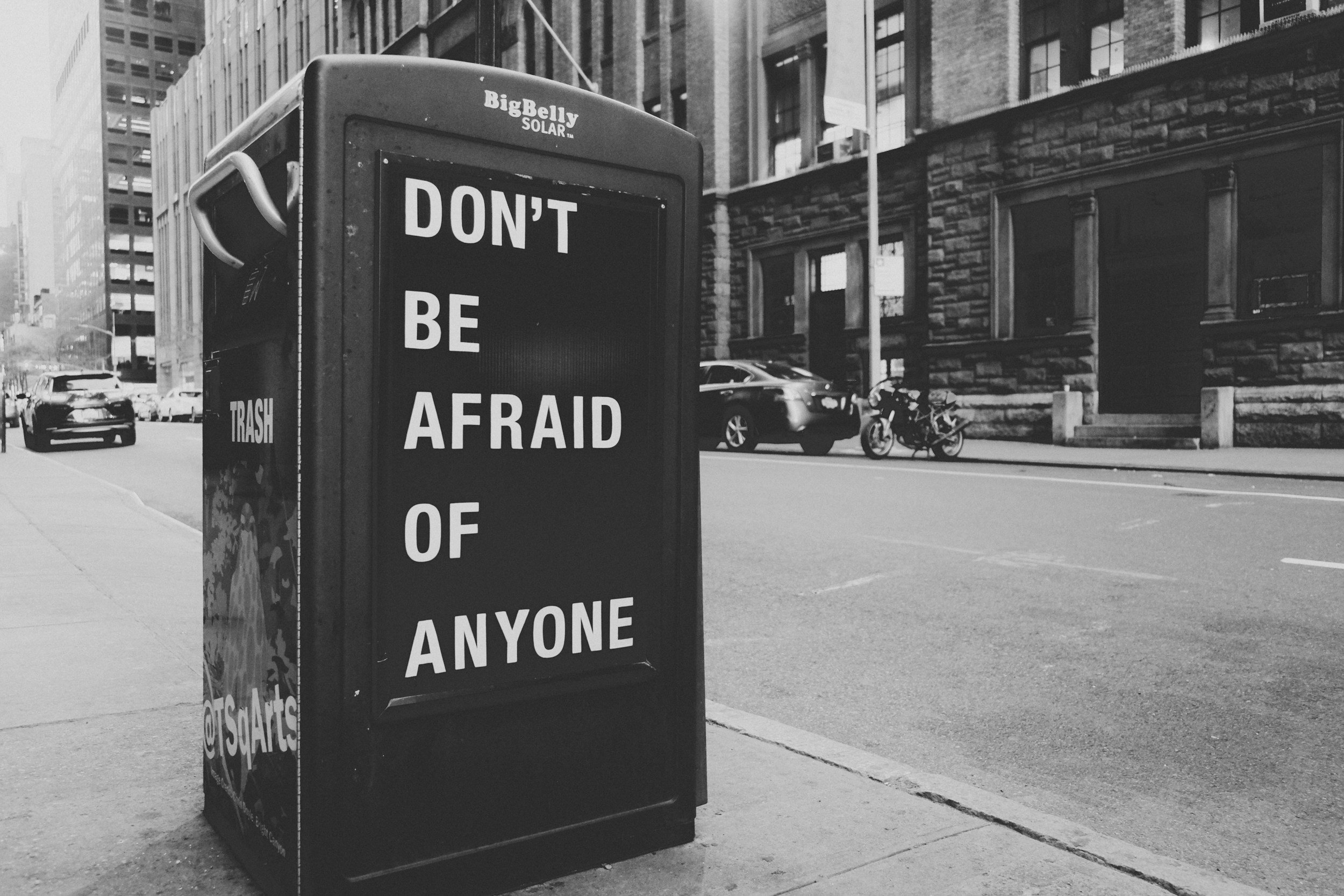
But let’s strip away the social media archetypes and call it what it clinically is: you are caught in a survival loop of hyper-independence. You have convinced yourself that needing another human being is a design flaw. You think that by keeping your guard up, protecting your autonomy, and refusing to lean on anyone, you are winning.
You aren't winning. You are isolating yourself inside a burning house of your own construction.
At Undefeated Healthcare, we look at human suffering through a systemic lens. We know that individuals do not exist in a vacuum. Your healing—and your capacity for joy—does not happen behind a fortress of self-sufficiency. It happens in connection with others.

We live in a culture that worships the hyper-independent archetype. Whether it’s the TikTok-glorified "Dark Feminine energy" that cuts everyone off, the "Alpha Grindset" that treats intimacy as a distraction, or avoidant attachment styles rebranded as "protecting my peace," we are constantly told that needing people is a weakness. We treat personal development like a finite checkout box: once I am completely healed, completely independent, and perfectly self-soothed, then I will allow someone near me.
That is a lie, and it is keeping you profoundly stuck.
This mindset forces you into personality-type victimhood. You claim, "I'm just a Sagittarius, I need my freedom," or "My OCEAN model score is low on agreeableness, I’m just not wired for compromise." These are just sophisticated ways of avoiding the vulnerability of real connection.
The clinical reality is much deeper. In a landmark narrative review published in Molecular Psychiatry by Dr. A. M. Marino and colleagues (2025), researchers mapped the direct pathways between adult attachment classifications, defensive structures, and interpersonal emotion regulation. The data is clear: individuals who rigidly rely on intra-personal suppression—bottling it up and doing it alone—experience significantly higher baseline rates of long-term psychological distress compared to those who utilize adaptive interpersonal regulation.
Continue reading the full field note
When you hide behind the armor of "I don't need anyone," you aren't being strong. You are engaging in a defensive shutdown mechanism.
The primary reason people avoid dealing with this issue is a massive cultural misunderstanding. They look at healthy interdependence and screech, "That's codependency!"
Codependency is a dysfunctional system where you organize your entire life around managing, controlling, or over-functioning for another person at the absolute expense of your own needs. It is an adaptation to unpredictability, often resulting in resentment and a complete collapse of personal responsibility.
Co-Regulation, on the other hand, is pure, beautiful neurobiology. As highlighted in seminal clinical frameworks by the PACT Institute, co-regulation is an active, team-sport architecture. It is the biological process where two nervous systems actively help each other lower stress, manage panic, and find safety. It is not passive. It demands absolute vigilance, radical accountability, and a fierce commitment to the "Couple Bubble"—the protective agreement that neither partner will drop the other.
As the legendary family therapist Stan Tatkin famously noted:
"We are hardwired for connection. Expecting an adult to be entirely self-sufficient in a relationship is a biological impossibility and a psychological fantasy."
When you move into an Undefeated Mindset, you stop viewing your partner as an opponent or a project. You realize that true strength is the ability to look at your teammate and say, "I am overwhelmed, and I need your nervous system to help settle mine."
Let’s speak plainly so a ninth grader can grasp it: If you refuse to rely on your partner because you are afraid they will let you down, you guarantee that your relationship will fail.
When you refuse to co-regulate, your nervous system stays on high alert. This problem presents itself across every domain of your life:
In the Home: It looks like chronic over-functioning. One partner handles the bills, the cleaning, and the emotional labor while quietly radiating a toxic layer of resentment.
At Work: It looks like an inability to delegate. You work 70 hours a week because "if you want it done right, you have to do it yourself," leading straight to burnout.
In Relationships: It manifests as the classic "Demand-Withdraw" cycle. One partner screams for connection, and the hyper-independent partner retreats into a shell of cold, Type-B pseudo-autonomy.
This isn't a rare problem. According to data tracked by the National Institute of Mental Health (NIMH), interpersonal stress and relational discord are primary co-occurring catalysts for major depressive episodes and generalized anxiety disorders. In fact, relational strain increases the statistical risk of developing an anxiety disorder by over 200%.
This hits everyone differently. Men are often conditioned by societal myths to view needing emotional comfort as a failure of masculinity, turning instead to substance use or explosive anger. Women frequently experience the "Invisible Workload" trap, where their extreme competence becomes their prison. Across lifespan development, younger adults often flee relationships the moment vulnerability is required, while older couples face a frozen, parallel existence—living as roommates who share a mortgage but haven't shared a true co-regulatory moment in decades.
If you are ready to stop surviving and start functioning securely, self-help books and social media clips are not going to cut it. Here are three reasons why stepping into professional, systemic therapy is your next power move:
You Cannot Practice a Somatic Art Alone: Co-regulation is a live, biological practice. You cannot learn how to synchronize your nervous system with another human being by reading about it. Systemic therapy provides a safe, live laboratory to experiment with vulnerability in real-time.
To Map Your Adaptive Blueprints: Your hyper-independence was likely a brilliant survival strategy when you were ten years old living in an unpredictable environment. But it is a terrible relationship strategy today. Therapy helps you honor that old armor while safely learning how to take it off.
To Build Secure-Functioning Architecture: Safe relationships don't just happen by accident. They require clear blueprints, rapid-repair strategies, and explicit agreements. A skilled clinician helps you build a custom "Couple Bubble" that can withstand the chaos of modern life.
Community resources like the Psychobiological Approach to Couple Therapy (PACT) network and structured systemic family systems programs are widely used to break these exact cycles, moving couples from a state of war to a state of collaborative safety.
Let's do some quick math. You already pay for health insurance every single month. You have access to copays that you are leaving on the table. Yet, people will spend thousands of dollars on weekend getaways, temporary self-care distractions, or dynamic fitness apps to escape the crushing loneliness of a disconnected marriage.
The financial, emotional, and physical cost of a broken home, a divorce, or chronic mental health burnout is astronomically higher than the cost of your insurance copay. You are already paying the price—you are just paying it in chronic stress, sleepless nights, and relational decay.
You do not have to carry the weight of the world on your shoulders anymore. True strength is not isolation; it is the courage to connect. At Undefeated Healthcare, we have clinicians ready to help you rebuild your relational architecture.
Immediate Availability: We have dedicated, expert therapists ready to see you without the standard months-long waiting lists.
Flexible Scheduling: We accommodate your life with evening and weekend appointments.
Insurance Maximization: We accept all major insurance programs to ensure your care is accessible, including Blue Cross Blue Shield, Aetna, Cigna, United, and Tricare.
Healthy dependence (secure functioning) means two autonomous individuals choose to team up, rely on each other, and use mutual co-regulation to lower life's stress. Codependency involves one person losing their identity to manage or fix another person's behavior, which creates a collapse of personal accountability.
If your automatic reaction to stress, fear, or vulnerability is to push people away and think, "I can only rely on myself," your nervous system is playing an old survival tape. When self-sufficiency feels mandatory rather than optional, it is typically an adaptive trauma response.
Yes. Undefeated Healthcare provides comprehensive, systemic individual, couples, and family therapy. We serve clients across our licensed regions, ensuring top-tier clinical support is available for families looking for an expert therapist in Virginia or West Virginia.
Secure functioning couples therapy techniques
Neurobiology of co-regulation vs emotional self-soothing
Systemic therapy for hyper-independence and avoidant attachment
This article is educational and doesn’t replace evaluation, diagnosis, or care from a qualified professional.